

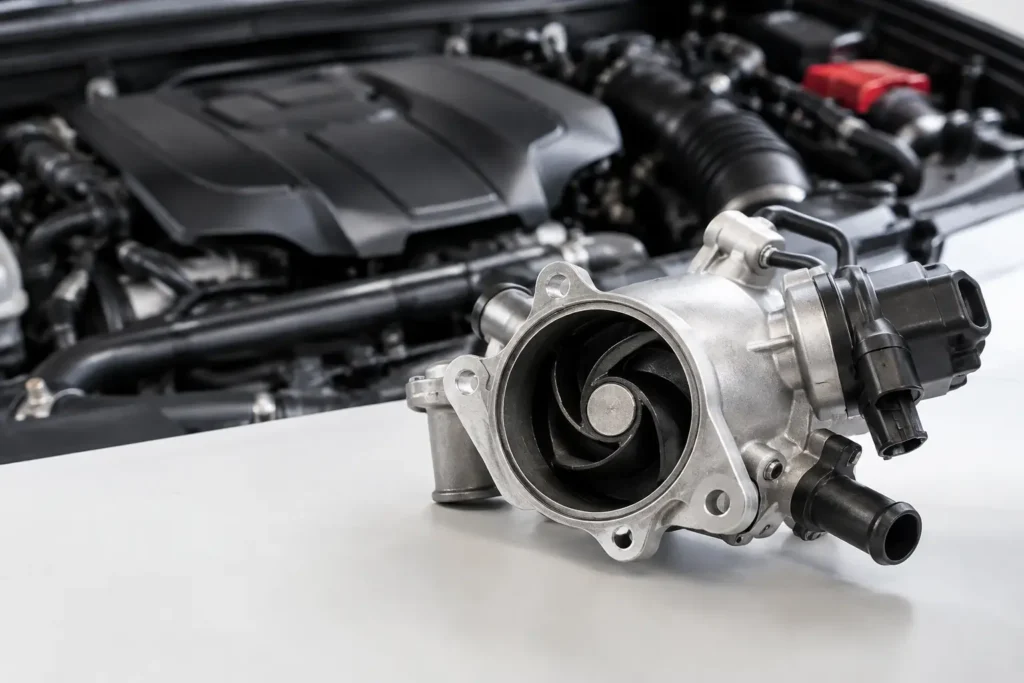
A cooling system can look perfectly full and still contain enough trapped air to cause temperature spikes, poor heater performance, coolant loss or localised boiling at the cylinder head. So, what is a swirl pot? It is a purpose-built coolant tank, usually mounted at the highest practical point in the system, that separates air from coolant while giving expanding coolant somewhere controlled to go.
For modified street cars, drift builds and race cars, a swirl pot is often the difference between a cooling system that merely works in the workshop and one that stays stable through repeated hard pulls, long sessions and aggressive braking. It is not a universal upgrade for every vehicle, but it is a serious solution when the engine, radiator layout or custom pipework makes bleeding difficult.
What Is a Swirl Pot and How Does It Work?
A swirl pot is a sealed or vented reservoir fitted into the pressurised side of an engine cooling system. Coolant enters the tank in a way that slows and circulates the flow. That calmer movement allows entrained air bubbles to rise out of the coolant and collect at the top of the tank rather than continuing around the engine.
The main coolant volume then exits from a lower outlet, feeding the water pump inlet or the main return side of the cooling circuit. A pressure cap at the top controls system pressure and routes excess expanded coolant to an overflow or recovery bottle where required.
The name comes from the way coolant is directed into the chamber. The incoming flow is commonly arranged tangentially so it creates a gentle circular motion. This helps separate air without violently aerating the coolant. Good internal design matters here: a tank with poorly positioned ports can simply become an expensive reservoir, rather than an effective deaeration point.
In a typical custom installation, small bleed lines from high points such as the radiator, cylinder head, thermostat housing or turbo coolant circuit feed into the upper section of the swirl pot. Those lines continuously carry small amounts of coolant and air back to the tank. This means the system can purge itself during operation instead of relying only on a one-time manual bleed.
Why Air in the Cooling System Is a Problem
Coolant transfers heat far more effectively than air. When air pockets sit around combustion chambers, exhaust ports or a temperature sensor, they create hot spots and make coolant temperature readings less reliable. Under track use, those hot spots can lead to boiling, pressure surges and coolant pushed out of the system.
Air can also cause water pump cavitation. If the pump draws aerated coolant, its impeller cannot maintain consistent flow and may suffer erosion over time. The result can be frustrating: the radiator is large enough, the fan is working, and yet the engine temperature still climbs unpredictably.
A swirl pot gives that air a deliberate escape route. It is particularly useful where the radiator is lower than the engine, pipework runs through the chassis, or the original expansion tank has been removed during an engine conversion. Mid-engine cars, rear-radiator race cars and vehicles with heavily revised turbo plumbing are common candidates.
Swirl Pot vs Expansion Tank vs Catch Tank
These terms are often used interchangeably, but the functions are not always the same.
An expansion tank primarily accommodates the increase in coolant volume as temperature rises. Many factory systems use a pressurised expansion tank as both the fill point and air separator. In that case, it can perform a similar role to a swirl pot, provided it is correctly placed and connected.
A swirl pot is more specifically designed to deaerate coolant. It normally has several inlet and bleed ports, a lower main outlet and enough internal volume for bubbles to separate before coolant returns to circulation. It may also act as the expansion point, depending on the system design.
A coolant catch tank or overflow bottle is usually unpressurised. It receives coolant expelled past the pressure cap as temperatures rise and, in a recovery arrangement, allows coolant to be drawn back in as the engine cools. It does not replace a swirl pot. On many race builds, the swirl pot carries the pressure cap and connects to a separate catch tank for compliant, tidy coolant containment.
Where Should a Swirl Pot Be Mounted?
Height is critical. The top of the swirl pot should sit above the highest point of the engine cooling circuit wherever packaging allows. Air naturally rises, so a low-mounted tank cannot effectively collect bubbles from a higher cylinder head or radiator top tank.
This creates a common challenge on low-bonnet cars. If the highest practical mounting point is not above every coolant passage, use dedicated bleed lines from the true high points and route them uphill to the swirl pot without dips or loops. A bleed hose that rises, drops and rises again can trap air in the very line intended to remove it.
Mount the pot securely on a rigid bracket, away from exhaust heat and moving components. Aluminium tanks are popular because they are light, weldable and suited to custom AN or hose-tail connections, but the bracket and fittings need to tolerate vibration. A full coolant tank is heavier than it looks, especially when the car is kerb-hopping or drifting.
Keep the pressure cap accessible. If it is the system fill point, you need room to fill it safely and inspect the coolant level. Also consider service access for hose clamps, bleed fittings and the overflow line before finalising the location.
Choosing the Right Swirl Pot for Your Build
There is no single capacity that suits every car. A compact pot may be enough for a simple front-engine track build with short hoses. A larger tank gives more air-separation volume and a more forgiving fill level on complex cooling systems, but it takes up valuable engine-bay space and adds weight.
Focus first on port layout. You need connections that match the system rather than forcing awkward reducers and sharp hose bends. Most installations require a large lower outlet to the water pump inlet or radiator return, a main inlet or return connection, plus smaller upper ports for continuous bleed lines. Unused ports must be closed with proper coolant-rated plugs, not improvised rubber caps.
Pressure-cap selection matters as well. Raising cap pressure increases the coolant boiling point, but it also increases load on hoses, radiator cores, heater matrices and seals. The correct rating depends on the engine, radiator and components in use. More pressure is not automatically better, particularly on older systems or lightweight aftermarket radiators.
For custom fabrication, choose quality hose, clamps and fittings rated for hot pressurised coolant. Cheap silicone hose may look right but can soften, swell or slip if its construction is not suited to the application. ProSpeed Parts-style performance cooling hardware is most valuable when every connection is specified as carefully as the tank itself.
Plumbing a Swirl Pot Correctly
The exact plumbing route depends on whether the thermostat, radiator and water pump are in their original locations. However, the principle remains consistent: the swirl pot must see coolant and air from the system’s high points, then supply a stable, air-free feed to the low-pressure side of the circuit.
The large outlet at the base is commonly routed to the water pump inlet. Small bleed lines from the radiator top, cylinder head and other high points enter near the top of the pot. These bleed lines should have a continuous, modest flow, not be blocked or pinched off because they appear insignificant. They are what keep the system self-bleeding.
Avoid routing a full-flow hose into the top of the tank in a way that blasts coolant directly at the cap or churns the fluid excessively. The inlet should promote separation, not foam. Where possible, follow the tank manufacturer’s port guidance and sketch the entire circuit before cutting hose or welding brackets.
After filling, run the engine from cold with the heater circuit open where applicable. Watch the coolant level as the thermostat opens, inspect every joint for leaks and allow the system to complete several heat cycles. Never remove a pressure cap from a hot engine. Once fully cool, recheck the level in both the swirl pot and any recovery bottle.
When You Need One, and When You Do Not
A swirl pot is worth considering when a build has persistent air locks, recurring coolant overflow, unexplained temperature fluctuations or a radiator mounted lower than the engine. It also makes sense after an engine swap where factory bleed paths and expansion hardware no longer suit the new layout.
It is not a cure for an undersized radiator, failed water pump, incorrect ignition timing, blocked coolant passages or a head-gasket issue. If a standard system is healthy, properly bled and retains a correctly positioned factory expansion tank, adding a swirl pot may offer little benefit. More fittings also mean more potential leak points, so fit one because the cooling layout demands it, not because every race car photo has one.
A well-designed swirl pot turns coolant control from a recurring bleeding exercise into a stable part of the build. Get the mounting height, bleed routing and pressure control right, and it will quietly protect the engine when the car is being used as intended.