

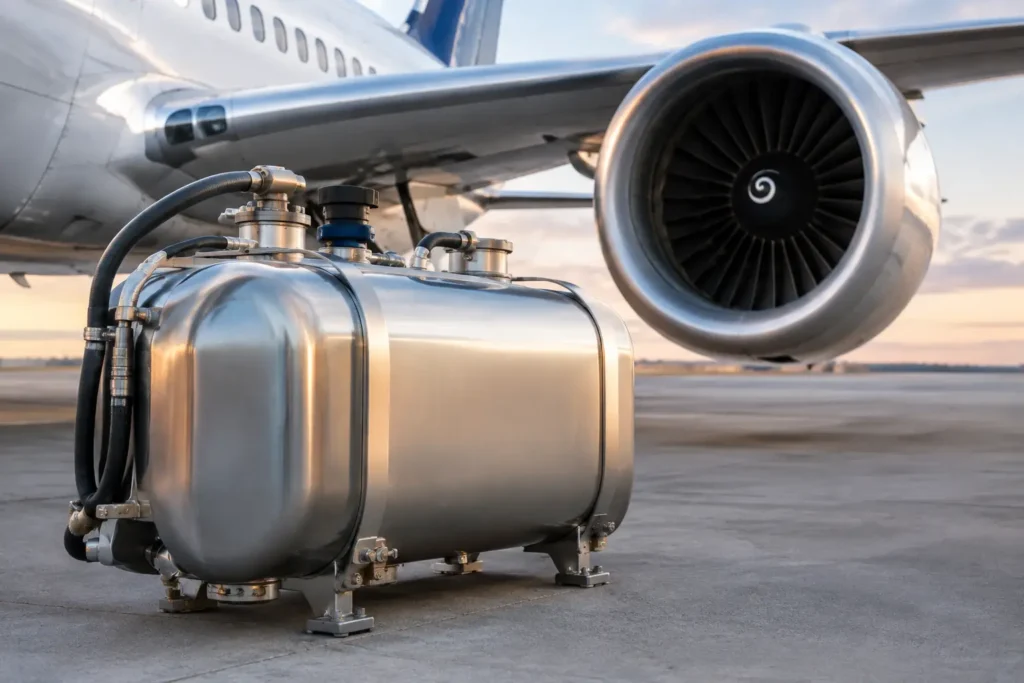
A fuel pressure dip halfway through a long right-hander is not a tuning mystery. If the engine pulls cleanly in a straight line but cuts, leans out or misfires when the car is loaded up, fuel is often uncovering the pickup in the main tank. So, can fuel surge tanks prevent starvation? In the right system, absolutely. They give the high-pressure pump a small, constantly replenished fuel reserve when the fuel in the factory tank is moving away from its pickup.
For drift, track, drag and high-grip street builds, that reserve can be the difference between a clean run and a dangerously lean cylinder. A surge tank is not a universal cure, though. It must be sized, plumbed and supplied correctly. Fit one around a weak lift-pump arrangement or restrictive hose, and the engine can still run out of fuel when it matters.
Can Fuel Surge Tanks Prevent Starvation Under G-Force?
A surge tank is a compact secondary reservoir, usually mounted outside the main fuel tank in the boot, fuel cell enclosure or another protected location. A low-pressure lift pump transfers fuel from the main tank into the surge tank. The high-pressure EFI pump then draws from the surge tank and feeds the engine.
The key is that the surge tank remains full for a short period even when the pickup in the main tank is briefly uncovered by braking, acceleration or cornering forces. Excess fuel from the fuel rail returns to the surge tank, while overflow from the surge tank returns to the main tank. That circulation keeps the high-pressure pump submerged and supplied.
This matters most in cars with a standard tank that was designed for normal road use, not repeated lateral load. A road car may cope perfectly at half a tank on the commute, then starve during a long circuit corner on semi-slick tyres. Drifters see a different version of the same problem: sustained sideways running can push fuel to one side of the tank and leave a conventional pickup dry.
A properly configured surge tank does not create fuel. It buys time. If the main tank is nearly empty, the lift pump cannot keep up, or the engine is consuming more fuel than the system can deliver, the surge tank will eventually drain.
What a Surge Tank Does – and Does Not Do
The biggest benefit is pump stability. Electric EFI pumps are cooled and lubricated by the fuel passing through them. Letting a high-pressure pump repeatedly ingest air can cause pressure fluctuations, lean spikes and premature pump wear. On boosted engines, where fuel demand rises sharply under load, that is a risk worth removing.
A surge tank is especially effective where the original in-tank module cannot be upgraded easily, where a custom fuel cell has a basic pickup, or where the car is moving to a larger external pump. It also allows a clean serviceable layout for filters, pumps, AN fittings and return lines.
However, it will not correct every fuel delivery issue. A blocked pre-filter, undersized feed line, collapsing rubber hose, poor electrical supply or a failing regulator can look like starvation on a log. Neither will a surge tank compensate for injectors that have reached maximum duty cycle or a pump with insufficient flow at the actual rail pressure.
Before buying hardware, confirm the fault. Log fuel pressure against boost and engine speed, and compare it with the commanded pressure. If pressure falls only in specific corners or under a particular direction of load, pickup starvation is likely. If it falls consistently at high rpm in every gear, look first at total pump capacity, voltage supply, filtration and line sizing.
The Typical EFI Surge Tank Layout
Most return-style EFI setups use four connections. The exact port layout varies by tank design, so always identify the ports before installation, but the system logic remains the same:
- A lift pump feeds the surge tank from the main tank.
- The high-pressure pump draws from the surge tank and sends fuel through a filter to the fuel rail.
- The regulator returns excess rail fuel to the surge tank.
- The surge tank overflow returns to the main tank.
The return from the surge tank to the main tank is essential. Once the surge tank is full, incoming lift-pump fuel must have a clear path back. Restricting that return can pressurise the reservoir, upset flow or force fuel out through a vented cap on an unsuitable design.
On many installations, the low-pressure side uses a coarse pre-filter before the lift pump, while the high-pressure side uses a fine EFI-rated filter after the high-pressure pump. Do not assume one universal filter is suitable everywhere. Fine filters placed before a pump can become restrictive, particularly with high-flow systems or fuel that is not perfectly clean.
Size the System for the Engine, Not the Internet
One to two litres is common for many performance EFI cars, but capacity should follow the application. A modest naturally aspirated track car may run reliably with a smaller reservoir. A high-power turbocharged car, a car that spends long periods at high lateral load, or a vehicle with an awkwardly shaped fuel tank may justify more reserve.
Larger is not automatically better. A bigger surge tank adds weight, takes up space and increases the volume of fuel within the system. More importantly, its size does not overcome a lift pump that cannot refill it. Think of the tank as a buffer, not a replacement for correct delivery capacity.
Calculate fuel demand from power, fuel type and target duty cycle, then select pumps based on their flow at operating pressure and voltage. Pump figures quoted at free flow are not enough. A pump that appears generous on paper can lose substantial capacity at elevated base pressure, boost-referenced pressure and low alternator voltage.
Fuel choice changes the calculation. E85 and other ethanol blends require materially more volume than petrol for the same power output. They also demand compatible pumps, seals, hose and fittings. If the car may move to ethanol later, building the system with compatible components from the start can avoid doing the job twice.
Installation Details That Decide Whether It Works
Mount the surge tank securely, upright where its design requires it, and away from exhaust heat, moving suspension parts and impact zones. In a road car, fuel plumbing should be protected from abrasion and routed away from the cabin wherever possible. Use proper bulkhead fittings when lines pass through panels. A loose tank held by a thin bracket or cable ties has no place in a performance build.
Keep the high-pressure pump close to and below the surge tank outlet where practical. Most external electric pumps push better than they pull, so gravity-fed supply to the pump helps prevent cavitation. Use fuel-rated hose, correct clamps or fittings, and line sizes that match the flow target. Cheap hose and unknown fittings can turn a tidy install into a leak risk.
Electrical work deserves the same attention as plumbing. Both pumps need correctly sized wiring, fuses and relays, with clean earth points. A high-output pump starved of voltage may deliver far less fuel than its advertised rating. For motorsport use, consider the relevant regulations for fuel containment, cut-off systems, firewalls and mounting positions before finalising the layout.
Do not forget venting in the main tank. As fuel is transferred out, the tank must breathe correctly. A restricted or incorrectly plumbed vent can create vacuum in the main tank and reduce lift-pump supply. That fault can imitate a surge tank problem, especially during a long session.
When a Surge Tank May Not Be the Best Answer
A baffled fuel cell with a proper internal collector and an in-tank pump module may offer a simpler, cleaner solution. Many modern in-tank systems use internal swirl pots or jet pumps that are highly effective when matched to the tank. For a street car that only sees occasional fast-road use, improving the in-tank pickup or retaining more fuel may be enough.
For race cars, a baffled cell with foam, trap doors or a collector box can reduce the need for an external surge tank, although the best choice depends on regulations and packaging. Carburetted engines also use different pressure and return strategies, so an EFI-style surge tank layout should not be copied blindly.
The external surge approach makes most sense when you need reliable fuel control from an existing tank, a custom build needs an external pump arrangement, or the car has already demonstrated starvation under load. It is a proven motorsport solution, but it must be treated as part of a complete fuel system.
Build the fuel system around the hardest corner, longest braking zone and highest boost pressure the car will see – not the easy test drive when the tank is full. That is where a correctly selected surge tank earns its space.