

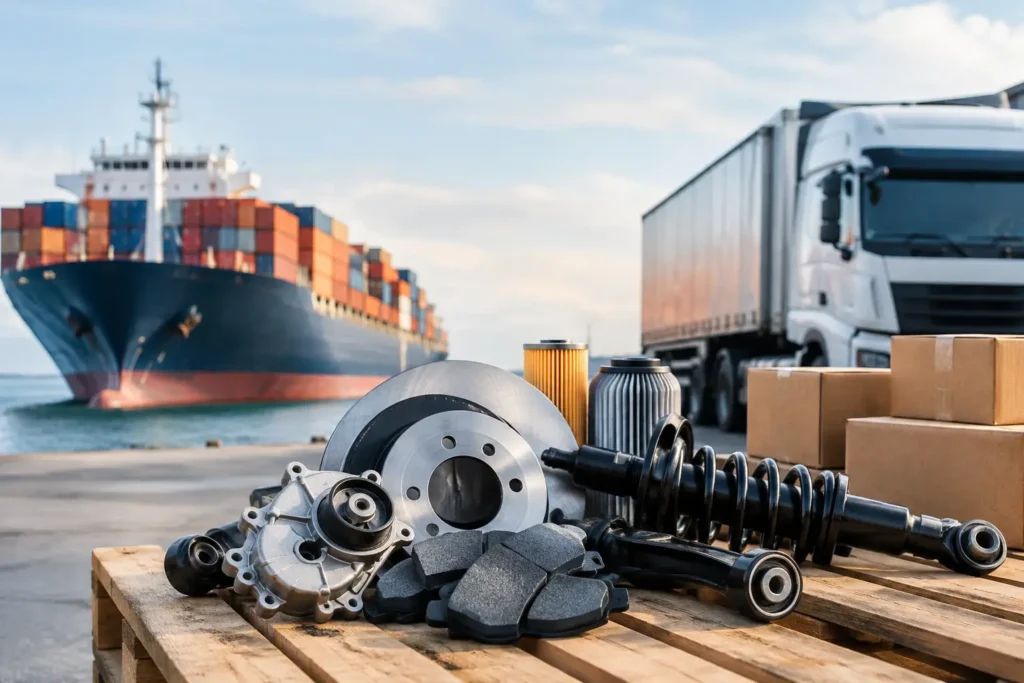
A missing -6 AN fitting can stop a fuel-system install. A damaged intercooler can put a track-day build back by weeks. When parts are crossing borders, worldwide shipping for car parts is not just about getting a parcel moving quickly. It is about ordering the right specification, packing it for the journey, and avoiding customs delays that leave a car stranded on stands.
For street, drift and race builds, the detail matters before checkout. The best shipping option cannot fix an incorrect thread, a hose cut too short or a brake component that does not suit the vehicle’s application. Get the order right first, then choose transport that matches the value, size and deadline of the parts.
Worldwide shipping for car parts starts with specification
Performance parts are often selected by dimensions and standards rather than a simple make-and-model search. That is especially true for custom plumbing, turbo installations, engine management and fabricated cooling systems. Before placing an international order, confirm the part number and check every measurement that affects fitment.
For fittings, establish thread type, pitch, sealing method and hose size. AN and NPT are not interchangeable, while metric threads can look close enough to cause an expensive mistake. For silicone hoses, confirm internal diameter, leg length, bend angle and whether the installation needs a reducer or a joiner. With clamps, measure the outside diameter of the assembled hose and pipework, not just the nominal hose size.
Vehicle-specific components need the same discipline. Check chassis code, engine variant, year range, drivetrain layout and brake specification. A coilover kit, radiator or intake may suit a closely related model but not clear the same transmission, steering rack or factory sensor arrangement. If a product is intended for motorsport use, make sure that is compatible with how the vehicle will be used and inspected in your country.
International returns are possible, but they are slower and more costly than getting fitment confirmed before dispatch. For a build with a hard deadline, retain the product reference, measurements and photographs of the installation area before ordering.
Choose the delivery service around the job
A set of lightweight fittings and a large alloy radiator should not be treated as the same shipment. Courier pricing is affected by both actual weight and volumetric weight. A large carton containing a low-weight bumper, intercooler or body component may cost more to transport than a dense box of brake discs.
Express courier delivery is usually the right call when a workshop bay, dyno session or race weekend depends on the parts arriving predictably. DHL Express services are particularly suited to urgent international consignments because tracking and customs processing are built into the service. ProSpeed Parts uses DHL Express for worldwide orders, giving performance buyers a fast, traceable option for specialist hardware and branded components.
Economy transport can make sense for non-urgent, bulky items, but it brings a trade-off. Transit estimates are generally wider, tracking updates may be less frequent, and a customs hold has a greater impact on the overall wait. If the order contains one essential component and several restock items, consider separating the urgent part from the larger shipment. Paying for two consignments can be cheaper than losing a booked workshop slot.
Packing is part of parts protection
Motorsport-grade components are built to work hard on the car, but that does not mean they should be loose in a carton. Threads, machined sealing faces, sensors, fins and painted surfaces all need protection in transit.
Small hardware should be bagged, labelled and secured so it cannot work through the box. Fittings benefit from thread protection, while electronic components need appropriate anti-static handling. Turbochargers, wastegates and fuel-system parts should be protected from impact and contamination. Cooling products require particular care: a light impact can bend radiator or intercooler fins, and a crushed core is not always obvious until airflow and cooling performance suffer.
Larger items need internal bracing and a carton with enough strength for handling through several depots. Packaging adds volume, which can affect freight cost, but cutting packaging to save a small amount is false economy on a high-value part. Inspect the external carton before accepting delivery. If there is visible damage, photograph it immediately and record the issue with the driver where possible.
Customs, VAT and duties need a realistic budget
The checkout total is not always the landed cost of an international order. Depending on the destination, buyers may be charged import VAT, duty, brokerage fees or local taxes before delivery. The rate can vary based on the declared value, the country of origin, the commodity classification and the type of product.
Do not assume every automotive component is treated the same way. A safety harness, electronic control unit, brake component and styling accessory can fall under different classifications. Customs authorities also work to their own rules, so a previous order arriving without charges does not guarantee the same result next time.
For trade customers, accurate paperwork is essential. Use the buyer’s full legal details where required and keep invoices available for accounting and import records. If a workshop is ordering regularly into the same country, plan a consistent process for duties and tax rather than treating each shipment as a surprise cost. This protects margins when quoting a customer build.
A carrier may ask for extra information during clearance. Fast replies matter. An unattended request for a tax number, invoice confirmation or product description can hold a shipment longer than the actual transport leg. Track the consignment from dispatch and make sure someone can respond to carrier notifications.
Avoid delays before the parcel leaves
An accurate delivery address is a performance upgrade for your logistics. Include the recipient name, business name where applicable, full postcode, country, contact telephone number and an email address that is checked. A workshop on an industrial estate should include unit number and any access detail that prevents a driver searching for the premises.
Check stock status before scheduling work around an order. A catalogue can contain fast-moving hardware, special-order products and items that ship in separate cartons. It is sensible to buy common consumables ahead of time – hose ends, clamps, spare sensors, heat sleeve and sealing washers – rather than waiting until a custom installation is half assembled.
There are four checks worth making before any international performance-parts order:
- Confirm part numbers, dimensions and compatibility with the actual vehicle.
- Decide whether the deadline justifies express delivery.
- Allow for import charges and possible customs contact.
- Use a complete delivery address and monitor tracking after dispatch.
These checks take minutes. They can save days of lost build time and the cost of returning the wrong part across borders.
Receiving parts for a serious build
When the delivery arrives, compare the contents against the order before dismantling old components. Confirm quantities, handedness, connectors, threads and supplied hardware. For a race or drift car, mock up critical components before final assembly where possible. A quick trial fit of a turbo elbow, oil cooler bracket or brake line route exposes clearance issues before fluids are filled and panels are refitted.
Keep packaging until the part has been checked and the build has moved beyond the test-fit stage. It is useful if a component must be transported to a fabricator, returned under an approved process or protected between workshop sessions. For electronics, retain serial-number records and installation details. This is good practice for service history as well as fault diagnosis.
Worldwide supply gives builders access to the right hardware instead of forcing a compromise with whatever is locally available. Use that advantage properly: specify the part with care, build realistic time into the shipment, and choose a delivery service that protects the programme as hard as the component protects the car.