

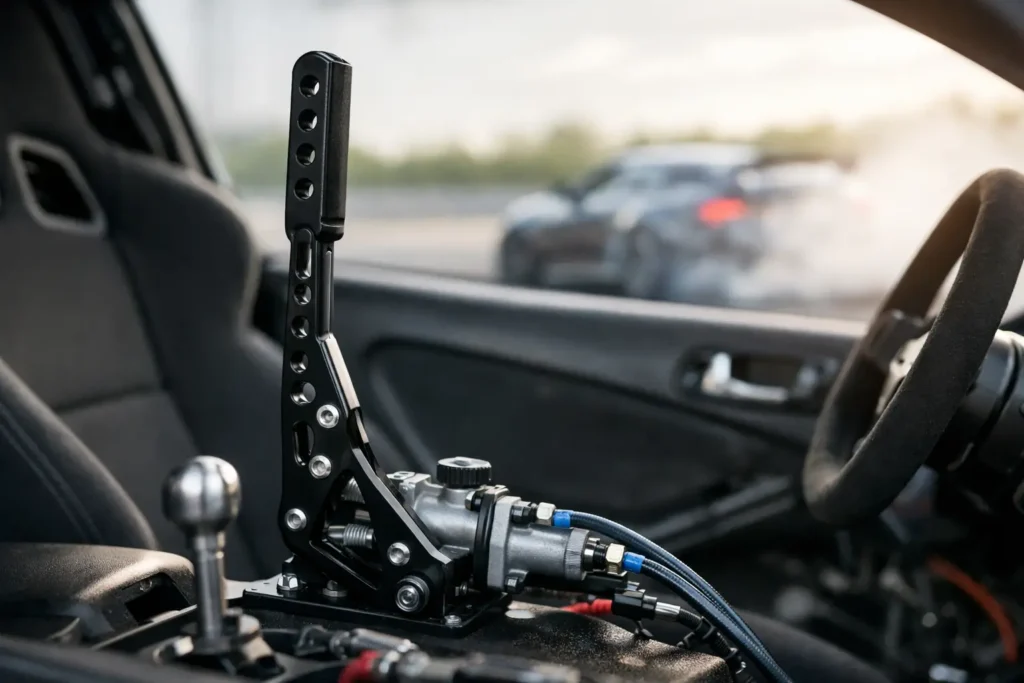
A hydraulic handbrake that locks instantly is useful. One that leaves the rear brakes dragging, flexes under load or does not suit the car’s brake layout is a wasted fabrication job. The best hydraulic handbrake kits are chosen around the vehicle, discipline and plumbing plan – not simply by picking the tallest lever or the cheapest universal kit.
For drift cars, a properly specified hydraulic lever gives fast, repeatable rear-wheel lock-up for initiations and corrections. On a track or rally-inspired build, it can provide controlled rotation where regulations allow. The details matter: master-cylinder bore, lever orientation, brake-line routing, mounting rigidity and whether the car retains a functioning independent parking brake all affect the result.
What Makes the Best Hydraulic Handbrake Kits?
A good kit starts with a rigid lever assembly and a quality hydraulic master cylinder. Pulling the lever should translate directly into hydraulic pressure, without a vague hinge, excessive flex or inconsistent travel. Steel or properly engineered aluminium construction, secure pivot hardware and a substantial mounting base are far more important than cosmetic finish.
The master-cylinder bore is the key specification. A smaller bore generally creates more line pressure with less lever effort, but it also requires more lever travel. A larger bore moves more fluid with a shorter, firmer pull, although it can demand more force. There is no universal best bore size because the correct choice depends on rear caliper piston area, disc setup and the driver’s preferred feel.
For many drift applications, a 0.625-inch master cylinder is a common starting point because it balances leverage and fluid displacement well. Cars with larger rear calipers or longer line runs may benefit from a larger bore, while compact rear calipers can respond better to a smaller unit. Treat bore size as a hydraulic matching exercise, not a styling choice.
A complete kit should also make the plumbing specification clear. Check the outlet thread, reservoir arrangement, supplied fittings and whether hose or hard-line adapters are included. Motorsport brake systems commonly use metric bubble-flare or inverted-flare fittings, while performance builds may be converted to AN-style plumbing. Mixing standards without the correct adapters is a fast route to leaks, damaged threads and unreliable braking.
Vertical, Horizontal and Fly-Off Lever Layouts
Lever position changes both installation and use. Vertical handbrakes are the familiar choice for drift builds. They are easy to reach during aggressive steering input and usually provide generous leverage. They need room above the transmission tunnel, however, and can obstruct centre-console trim, switch panels or a sequential shifter layout.
Horizontal kits sit lower and can suit track-focused interiors, confined cabins or drivers who want the lever closer to an original handbrake position. Their packaging is often easier, but the mounting point must still be reinforced. Bolting a hydraulic handbrake through thin tunnel sheet metal is not enough. The base needs a properly braced structure tied into strong floor or tunnel sections so the lever cannot move under peak load.
A fly-off arrangement allows the lever to return after use rather than staying locked. This is usually the preferred option for drift and competition use, where the driver needs a quick input and immediate release. Locking mechanisms are more relevant to static holding duties, but a hydraulic handbrake should not be relied upon as the only parking brake. Hydraulic pressure can bleed down as the system cools, seals age or temperature changes.
Inline or Independent Rear Circuit?
This is the decision that defines the installation. An inline hydraulic handbrake is installed in the existing rear brake circuit. When the lever is pulled, it pressurises the rear brakes through the vehicle’s normal calipers. It can be a practical solution for a dedicated drift car, but it must be designed carefully to avoid unwanted pedal behaviour and poor brake balance.
An independent setup uses a separate pair of rear calipers or a dedicated hydraulic circuit for the handbrake. This is the more serious approach where packaging and budget permit. The foot brake remains its own system, while the hydraulic lever operates dedicated calipers. It offers cleaner function, avoids compromises in the service-brake circuit and gives better scope for adjustment in competition cars.
Neither route is automatically right. An inline system may be suitable for a stripped drift build with a straightforward rear circuit and experienced installation. An independent setup makes more sense for race cars, high-value builds and vehicles where preserving predictable foot-brake performance is non-negotiable. If the car uses ABS, electronic stability control or complex diagonal brake circuits, the planning stage becomes even more important. Do not assume a universal kit will integrate correctly.
Choose the Kit Around the Whole Brake System
The handbrake lever is only one part of the job. Brake fluid condition, rear pad compound, disc condition, caliper health and tyre grip all affect whether the rear wheels lock consistently. A premium lever cannot compensate for contaminated pads, seized sliders, air in the lines or a poorly bled system.
For a street-and-drift project, retain a mechanical parking brake wherever possible. It is the sensible solution for securing the car when parked and may be required for roadworthiness or inspection. A hydraulic handbrake is normally a competition control rather than a replacement for the original parking-brake system. Check the applicable road-use, MOT and motorsport regulations before building around one.
It is also worth considering the driving environment. A low-power car on narrow tyres may need little hydraulic assistance to break rear traction. A high-grip, wide-tyre build with substantial rear brakes may require more considered master-cylinder sizing and lever geometry. Rally, drift and circuit cars can all use hydraulic handbrakes, but they demand different responses from the same basic hardware.
Installation Details That Decide Reliability
Brake work is safety-critical. If you are not fully confident in flaring, routing and bleeding hydraulic systems, have the installation completed or inspected by a specialist workshop. The quality of the installation is as important as the kit itself.
Use brake-rated hose, fittings and fluid throughout. Route lines away from exhaust heat, sharp edges and moving suspension components, and support them at sensible intervals. Avoid tight bends that can kink hose or place a constant side load on a fitting. Where lines pass through bulkheads or panels, use proper grommets or bulkhead fittings rather than allowing hose to chafe against bare metal.
Mount the cylinder so its reservoir can be filled and checked without dismantling half the interior. If using a remote reservoir, use compatible feed hose and position it above the master cylinder to support reliable fluid supply. Protect exposed fittings from shoes, debris and accidental knocks inside the cabin.
Once installed, pressure-test the system before the car is driven in anger. Check every joint for seepage, bleed the brakes thoroughly and confirm that the foot pedal remains firm. Test the handbrake progressively in a controlled private area, not on a public road. The aim is predictable rear-brake response, not maximum violence at the first pull.
Buying the Right Kit for Your Build
When comparing kits, prioritise specification over marketing. Confirm the master-cylinder bore, inlet and outlet threads, lever type, mounting dimensions and whether the kit includes a reservoir and hardware. Measure the available cabin space before ordering, especially on cars retaining factory dashboards, consoles, roll-cage door bars or close-mounted shifters.
For workshops and fabricators, standardising on quality fittings and serviceable components pays off over repeated builds. A kit that uses identifiable threads, replaceable seals and readily available fittings is easier to maintain than an unknown assembly with proprietary hardware. ProSpeed Parts customers building drift, track and race cars should also plan the complete system at once: lever, cylinder, brake line, adapters, mounting plate, reservoir and the correct fluid.
The best hydraulic handbrake is the one that matches the rear braking system, fits the cabin without compromise and is installed to the same standard as every other safety-critical part of the car. Build it around control and repeatability, and the lever will feel like part of the chassis rather than an afterthought.