

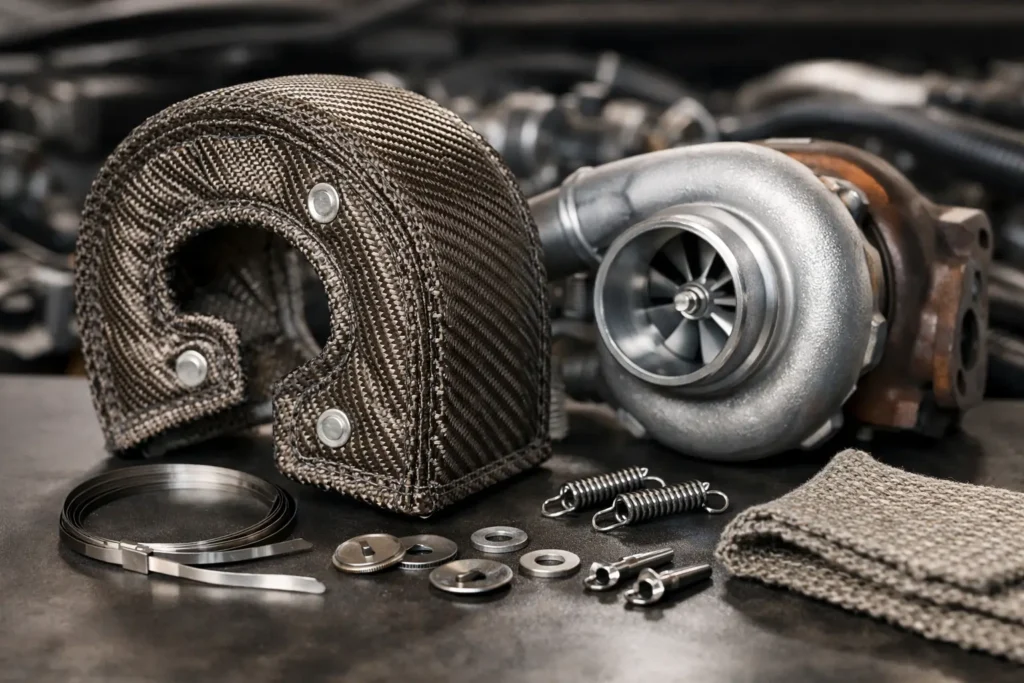
If your turbo setup is cooking nearby hoses, hardening wiring insulation or pushing under-bonnet temperatures higher than they need to be, a turbo heat shield kit is not a cosmetic extra. It is a functional part of heat management. On a street car it helps protect surrounding components and keeps the bay tidier from a thermal point of view. On a drift or race build, where sustained load and repeated heat cycles are part of the job, it can be the difference between a reliable session and chasing failures that should have been prevented.
Why a turbo heat shield kit matters
A turbocharger lives in one of the harshest areas of the engine bay. Exhaust gas temperature is high by design, and once boost, fuelling and ignition are pushed beyond stock levels, the heat load rises quickly. The turbine housing radiates that heat into everything around it – coolant lines, intake pipework, brake reservoirs, looms, bulkheads and bonnet paint. Even if the turbo itself is healthy, the surrounding area takes a punishment.
That is where a turbo heat shield kit earns its place. The aim is not to make heat disappear. It is to manage where that heat goes and how much of it reaches vulnerable parts. A properly chosen shield can reduce radiant heat transfer, help stabilise under-bonnet temperatures and protect components that were never designed to sit next to a glowing turbine housing.
There is also a performance angle. Cooler intake-side components and less heat soak around the engine bay can support more consistent results, especially on repeated pulls or long sessions. The gains are rarely headline numbers on their own, but consistency matters. Anyone building a proper turbo car knows repeatability is worth more than a one-off dyno graph.
What a good turbo heat shield kit should actually do
The best kits are simple in principle. They create a barrier between the hottest turbo parts and everything else, while surviving vibration, weather, repeated thermal cycling and the awkward packaging that comes with modified cars.
Material choice is the first thing to check. Thin, flimsy metal may look acceptable out of the box, but it can warp or crack after repeated use. Better shields use stainless steel or similarly heat-tolerant materials that hold shape under real operating conditions. Some kits combine rigid outer construction with thermal insulation layers to reduce radiant transfer more effectively.
Fitment matters just as much as material. A shield that sits too far from the housing may not protect the right areas, while one that interferes with wastegate actuators, oil feeds, downpipes or compressor housings creates a different set of problems. Universal kits can work well on custom builds, but they demand more planning. Vehicle-specific or turbo-frame-specific options usually make more sense where packaging is tight and access is limited.
Mounting hardware should not be an afterthought. The shield is going to live next to intense heat and constant vibration. Poor brackets, weak fixings or badly positioned attachment points tend to fail long before the shield material does. If the kit uses decent hardware and sensible mounting points, that tells you a lot about whether it was designed for actual use or just shelf appeal.
Turbo heat shield kit vs turbo blanket
This is where buyers often need to be realistic. A turbo heat shield kit and a turbo blanket are not the same thing, even if both are sold as heat-control products.
A heat shield is usually a formed barrier mounted around the turbo area to deflect and contain radiant heat. A blanket wraps directly around the turbine housing. Blankets can be very effective, particularly where space is limited and maximum heat containment is needed. They are common on competition builds for a reason.
The trade-off is that blankets sit directly on the hottest part and need to be made properly to survive. Cheap ones break down, fray or trap contamination. Heat shields, by comparison, can be easier to inspect, easier to remove and sometimes better suited to street-driven cars where serviceability matters.
In some setups, using both makes sense. In others, it is unnecessary or can create packaging headaches. If your build is already tight around the turbo, steering column, manifold and brake lines, adding multiple layers of heat control without a plan can make maintenance more awkward than it needs to be.
Where the biggest benefits show up
The obvious win is component protection. Silicone hoses, wiring, vacuum lines and plastic reservoirs all suffer when they are exposed to constant radiant heat. Heat damage is not always dramatic at first. Often it starts as brittleness, discolouration, hardening or unexplained electrical gremlins. Then you find yourself replacing nearby parts that should have lasted far longer.
The second benefit is temperature control in the wider bay. On tightly packaged turbo cars, especially transverse setups or engine bays with larger aftermarket turbos, heat builds up quickly after a hard run. Shielding helps contain the worst of that radiated energy instead of letting it soak every surrounding surface.
The third benefit is driver confidence. If you are running track days, drift events or hard road mileage, you want to know your setup is not quietly damaging itself. Heat management is not glamorous, but serious builds are not held together by glamour. They are held together by proper parts in the right places.
How to choose the right kit for your build
Start with your turbo position and surrounding components. A top-mount manifold with plenty of bay exposure has different shielding needs from a low-mount setup buried behind factory-style heat barriers. Look at what sits closest to the turbine housing. If the nearest parts are brake lines, clutch lines or looms, prioritise coverage in those directions rather than buying on appearance alone.
Next, think about use case. A fast road car that sees occasional spirited driving has different demands from a drift car living on limiter transitions or a race car doing repeated hot laps. More load means more sustained temperature, and that usually means higher value in better materials and more secure mounting.
Service access is another factor people ignore until they are working on the car. If you need regular access to oil feeds, V-band clamps, wastegate hardware or manifold fixings, choose a shield that can be removed without turning a quick job into a full strip-down. There is no point fitting a part that protects well but makes routine maintenance a chore.
Finally, be honest about fabrication. A universal turbo heat shield kit may offer flexibility and better value, but only if you are able to trim, mount and support it properly. If not, a well-designed application-specific kit is usually the better buy.
Common mistakes with heat shielding
The biggest mistake is assuming any shield is better than none. Poorly fitted shielding can rattle, crack, foul moving parts or leave hot spots exactly where you were trying to avoid them. Heat management needs to be deliberate.
Another mistake is focusing only on the turbo itself. The shield should be part of a wider package that may include heat sleeving for hoses, reflective barrier material for nearby panels and sensible routing for wiring and fluid lines. If a loom is cable-tied too close to the turbine housing, even the best shield has limits.
There is also a habit of buying the cheapest option available, then expecting motorsport durability. That rarely ends well. If the car is used hard, budget hardware tends to show its weakness quickly through vibration fatigue and poor material stability.
Installation and long-term reliability
Before fitting any kit, check clearance at full engine movement, not just with the car parked up. Under load, driveline movement can bring components closer together than expected. That matters near a turbo.
Use the supplied hardware if it is good quality. If it is not, replace it with proper heat-tolerant fixings. Tighten everything correctly, then recheck after the first proper heat cycle. Metal expands, brackets settle and small clearances can change once the system has been through real temperature.
Inspection should become part of normal servicing. Look for cracks, loose hardware, rubbing points and signs of excessive local heating. A shield is not a fit-and-forget item on a hard-used performance car. It is a functional component that deserves the same attention as clamps, lines and mounts.
For workshops and repeat builders, that reliability point matters even more. The right parts reduce call-backs, save labour later and keep customer cars consistent. That is one reason specialist suppliers such as ProSpeed Parts focus on hardware that suits actual performance use rather than generic aftermarket shelf filler.
Is a turbo heat shield kit worth it?
For most turbo builds, yes – provided the kit suits the setup and is installed properly. If your bay temperatures are modest, packaging is generous and all vulnerable components are already well protected, the gain may be smaller. But on many modified cars, especially those with bigger turbos, custom manifolds or motorsport use, heat shielding is one of the more sensible upgrades you can make.
It is not a magic fix for a badly designed engine bay. It will not solve poor routing, inadequate cooling or failing components elsewhere. What it does do is reduce unnecessary thermal punishment in an area of the car that sees plenty already.
That is usually money well spent. When the build is fast, tight and properly used, controlling heat is not optional detail work. It is part of building the car properly from the start.