

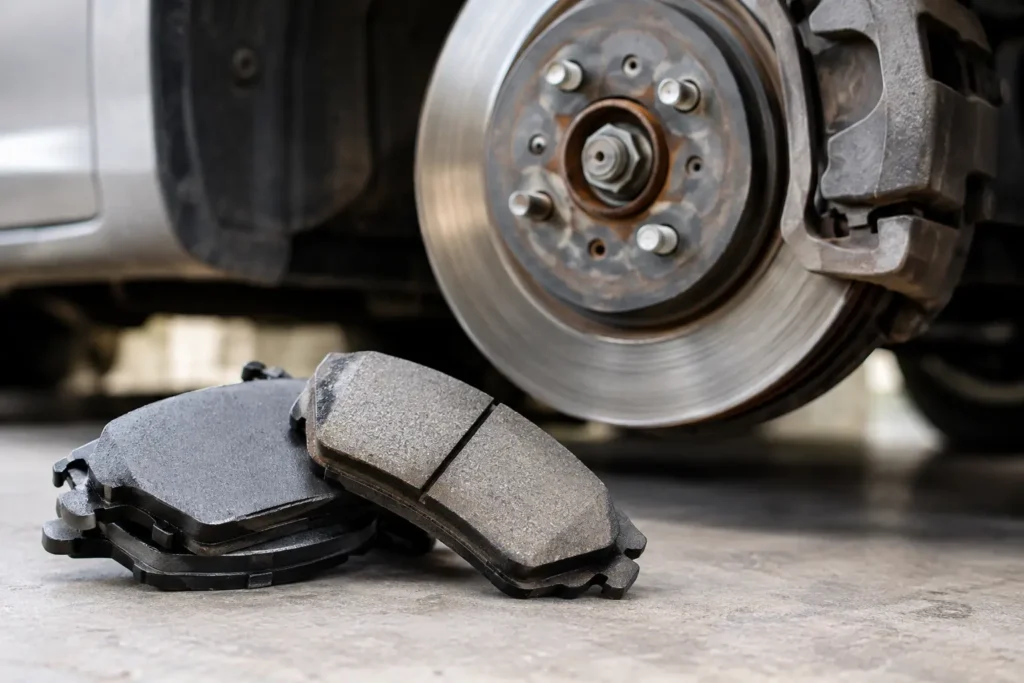
A fresh set of pads can disappear surprisingly quickly when a car moves from fast-road use to repeated hard braking, drift work or track sessions. Brake pad longevity is not a fixed mileage figure printed on a box. It is the result of pad compound, disc condition, caliper health, brake temperature, vehicle weight and how the pedal is used.
For a lightly driven road car, 30,000 miles from a front pad set may be realistic. For a turbocharged track build on sticky tyres, a weekend at the circuit can take a meaningful percentage of the friction material away. The question is not simply how long pads should last. It is whether the pad, disc, fluid and cooling setup are matched to the job.
Brake Pad Longevity Starts With the Right Compound
Every brake pad compound trades something for something else. A quiet, low-dust street pad is designed to work cleanly from cold and remain civilised in traffic. It may deliver excellent service life on the road, but sustained high-temperature use can push it beyond its intended operating range. Once the binder overheats, fade, glazing and accelerated wear can follow.
Performance street pads sit between daily usability and harder use. They generally tolerate higher temperatures and offer a firmer, more consistent pedal under spirited driving. Their lifespan varies widely because the same compound can be gentle in a fast road car and short-lived in a heavier vehicle driven hard through mountain roads.
Track-focused and race compounds are built for thermal stability and repeatable friction, not low dust or long service intervals. Some are surprisingly durable once at temperature, while others sacrifice material to maintain bite. A long-lasting race pad is not automatically the best choice either. A very abrasive compound may preserve pad thickness while wearing discs faster, increasing the true running cost.
For drift cars, the calculation is different again. The front brakes may see sharp, repeated applications to initiate or control weight transfer, while the rear setup can work hard through hydraulic handbrake use. Choose compounds for their actual axle load and temperature demands, rather than fitting the same pad material at all four corners by default.
Mileage Is Only a Rough Reference
Published mileage estimates are most useful on standard road vehicles. Modified cars change the variables quickly. Bigger wheels and tyres add rotating mass, power upgrades raise entry speeds, and aerodynamic grip increases braking load. Even a modest increase in pace can make conventional mileage expectations irrelevant.
Use pad thickness, wear pattern and pedal behaviour as your guide. Do not wait for the warning light if the car sees hard use. Many performance pads begin with around 15 to 20 mm of total thickness including the backing plate, but the minimum safe friction-material thickness should always follow the pad manufacturer and vehicle guidance.
Heat Is the Main Enemy of Brake Pad Life
Pads wear when friction converts speed into heat. That is their job. Problems start when heat cannot leave the system between braking events.
A heavy car, a short circuit with repeated braking zones, high ambient temperatures and insufficient cooling can all push pad temperatures beyond their stable range. At that point, the material can smear across the disc, crack at the edges, taper aggressively or glaze into a shiny, low-friction surface. The driver may feel a longer pedal, reduced bite or a smell that signals the brakes are being overworked.
Brake ducts are not a cosmetic motorsport add-on. Properly designed ducting can direct airflow towards the disc bell and vanes, allowing the rotor to shed heat more effectively. That reduces the heat transferred back into the pad, caliper and fluid. On a track or drift build, ducting can improve consistency as much as changing pad compound.
Fluid matters too. Old or unsuitable fluid can boil under high temperatures, creating a soft pedal that encourages the driver to brake earlier and harder. High-quality high-boiling-point fluid, correctly bled, supports pedal consistency. It will not make an unsuitable pad survive race temperatures, but it removes one common weak point from the system.
Disc Condition Changes Pad Wear
Pads and discs are a working pair. Fitting premium pads to worn, lipped or heavily grooved discs is a false economy. The new material cannot bed correctly against an uneven surface, and the high spots can cause noise, vibration and uneven transfer layers.
Disc thickness is equally critical. A disc below its minimum thickness has less thermal mass and will heat up faster. It is more likely to distort under sustained load and can accelerate pad wear. Measure the disc rather than judging it by appearance alone, especially on used performance cars with unknown service history.
Cross-drilled, grooved and plain discs all have application-specific strengths, but none can compensate for bad preparation. When changing compound families, particularly from a road pad to an aggressive track pad, inspect the disc face carefully. In some cases, replacing or resurfacing discs is the best way to establish a clean bedding surface.
Bedding-In Is Not Optional
Correct bedding-in creates an even layer of pad material on the disc. This transfer layer allows stable friction and reduces the chance of judder or localised deposits. The exact procedure differs by compound, so use the pad manufacturer’s instructions rather than applying one generic routine to every set.
A typical process involves several controlled stops to raise temperature progressively, followed by a cooling period without sitting stationary with the brake pedal clamped. Holding hot pads against hot discs can imprint material in one area, which is often felt later as vibration under braking.
If a new set of pads feels poor after fitting, do not immediately assume the compound is wrong. Check bedding, disc preparation, caliper movement and brake fluid condition first.
Driving Style and Vehicle Setup Matter More Than Most People Expect
Two identical cars can consume pads at completely different rates. The driver who brakes once, firmly and progressively before a corner often manages heat better than the driver who drags the pedal for a long distance. Trail braking has its place, but constant light braking builds temperature without always delivering the strongest deceleration.
Vehicle setup also changes the workload. Increased front grip, stiffer suspension, a rearward brake-bias adjustment or a larger rear wing can alter which axle works hardest. On race cars, temperature paint, thermal strips or regular pad inspections provide useful evidence. Guesswork is expensive when a car is using pads unevenly.
A sticking caliper piston or seized slider can destroy brake pad longevity even on a road car. Typical signs include one pad wearing much faster than its partner, the car pulling under braking, a hot wheel after a normal journey or a noticeable burning smell. Do not fit another set of pads until the mechanical cause is fixed.
Wheel bearing play, disc runout, incorrect pad hardware and poorly fitted shims can also create taper wear and noise. The pad may be blamed, but the issue is often installation or caliper condition.
Inspection Points for Street, Drift and Track Cars
For road-driven performance cars, inspect pad thickness at every tyre rotation or service interval. For drift and track vehicles, check them before and after each event. Inner pads are especially easy to miss, and they can wear faster than outer pads where caliper movement is compromised.
Look beyond remaining thickness. A worthwhile inspection includes:
- Cracks extending from the pad edge towards the backing plate
- Glazing, crumbling material or discolouration from overheating
- Uneven wear across the pad face or between inner and outer pads
- Disc cracking, deep scoring, heavy lips or blue heat marks
- Loose anti-rattle hardware, damaged dust boots and leaking calipers
If pads are close to the limit, replace them as an axle set. Mixing compounds side to side can produce inconsistent friction and unpredictable braking response. On a dedicated track car, keeping a spare bedded-in pad set and the correct tools in the trailer is sensible insurance.
Choosing for Value, Not Just Pad Life
The cheapest pad per set is rarely the cheapest braking solution. Consider pad wear, disc wear, fade resistance, cold bite, noise, dust and the time spent changing components. A fast-road car that sees occasional track days may be best served by a high-quality performance street compound and fresh fluid, rather than a noisy race pad that never reaches its working window on the road.
A dedicated circuit car needs a compound matched to vehicle weight, tyre grip, brake hardware and session length. A drift car needs predictable response and a setup that suits its front-brake demands and rear hydraulic system. Build the system around the use case, then inspect it often.
ProSpeed Parts customers build cars for different jobs, but the principle stays the same: reliable braking comes from matching every component, not chasing one headline specification. Treat pad wear as feedback from the car. If a set is disappearing too fast, the answer may be a better compound, more cooling, renewed discs or a caliper service – and finding that answer before the next hard stop is what keeps a performance build ready to push.