

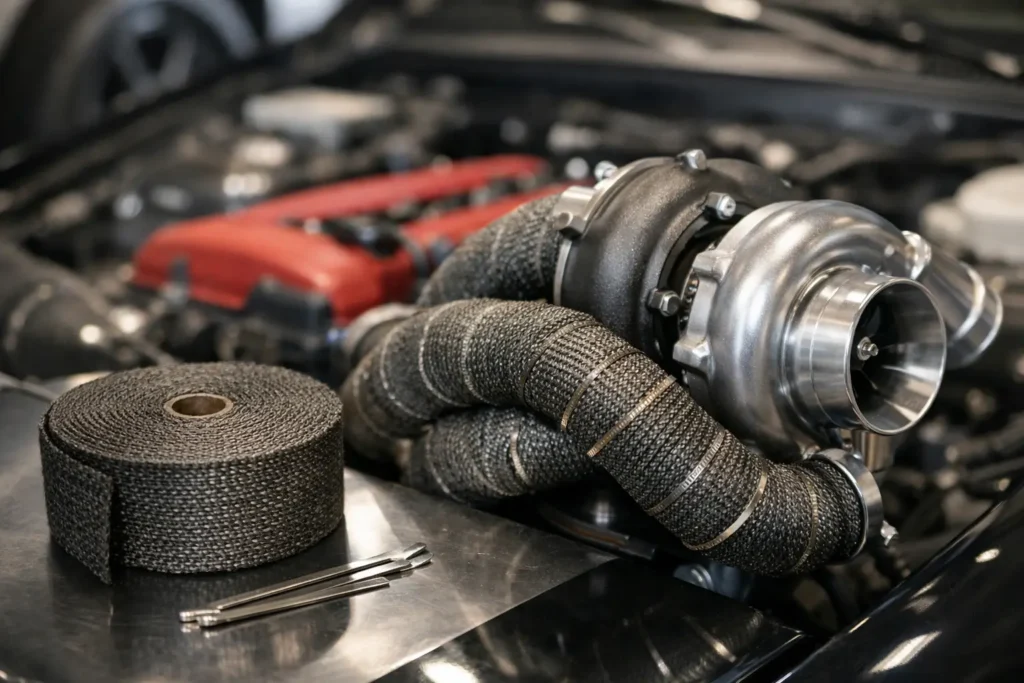
A turbo manifold can turn an engine bay into a heat soak problem very quickly. The best turbo manifold wrap is not simply the thickest roll or the one with the highest advertised temperature figure. It is the material, fit, installation method and intended use working together to keep exhaust energy in the runners while protecting the components around them.
For a street turbo build, drift car or dedicated race application, manifold wrap can reduce radiant heat around intake pipework, brake reservoirs, wiring looms, hoses and bodywork. It can also help retain gas temperature in the exhaust side of the system. But wrap is not a cure for poor manifold design, inadequate heat shielding or tight clearances. Choose it as part of a complete heat-management plan.
What Makes the Best Turbo Manifold Wrap?
A worthwhile turbo manifold wrap needs to tolerate repeated heat cycles, vibration and contamination without falling apart. It also needs enough flexibility to follow tight primary bends without leaving large gaps or creating bulky overlaps that interfere with the turbo, wastegate or downpipe.
Material temperature capability matters, but so does the stated use case. Exhaust gas temperature, runner-wall temperature and the external temperature seen by the wrap are not identical. A hard-driven turbo engine can put enormous thermal load into the manifold, especially on anti-lag-equipped cars, sustained track builds and high-boost applications. Do not select wrap based on a single headline number alone.
The best choice also depends on what you are wrapping. A compact cast manifold may need a narrow, flexible tape to get between runners. A tubular stainless manifold often benefits from wider wrap and carefully positioned locking ties. If the manifold is already ceramic coated, decide whether further wrapping is genuinely necessary, as combining heat treatments can raise material temperatures significantly.
Basalt and lava rock wrap
Basalt fibre, often marketed as lava rock wrap, is the strongest all-round option for most performance turbo builds. It handles high heat well, has a dense woven construction and generally resists fraying better than basic fibreglass. It is a sensible fit for fast road cars, drift cars and track builds where the manifold sees frequent heat cycles.
Natural basalt wrap typically starts in a dark brown or charcoal shade and may change colour after its first heat cycles. That is normal. The key consideration is that the weave remains secure and the wrap is held under consistent tension. Cheap basalt products can be inconsistent in thickness and fibre quality, so buy by specification rather than appearance alone.
Titanium wrap
Titanium wrap is commonly a premium basalt-based product rather than metal titanium tape. It is usually recognisable by its tan or gold finish before use and is popular where appearance matters as much as thermal control. Quality titanium wrap is durable, flexible and well suited to exposed engine bays where the manifold remains visible.
It is not automatically better than every basalt wrap. The actual weave, thickness, maximum continuous temperature rating and fastening hardware determine whether it will last. If two products use similar basalt fibre construction, the difference may be more about finish and brand positioning than a dramatic performance gap.
Fibreglass and silica wrap
Fibreglass exhaust wrap remains the budget option and can work well on lower-demand street applications. It is easy to source, easy to fit and effective at reducing local radiant heat when correctly installed. The trade-off is durability. On a very hot turbo manifold, particularly one exposed to oil mist, road spray and repeated hard use, basic fibreglass can become brittle sooner than basalt.
Silica wrap is built for higher temperature use than ordinary fibreglass and can be a strong choice where heat load is extreme. It is often more expensive and may be less forgiving to handle. For a race car with a properly fabricated manifold and clear heat-management requirements, that extra capability may be justified. For a weekend road car, a quality basalt wrap is normally the more balanced purchase.
Match the Wrap Width to the Manifold
Most turbo manifold wrap is available in narrow and wide rolls. Narrow wrap is slower to install, but it follows individual runners, tight radii and collector sections more neatly. It is usually the better option for equal-length tubular manifolds, complex external wastegate layouts and compact transverse engine bays.
Wider wrap covers long, open sections more quickly and reduces the number of overlaps. It can suit log-style manifolds and simpler fabrication, but may bunch up around bends. Excessively thick overlap can trap heat unevenly and leave poor clearance to nearby parts.
As a practical rule, select a width that lets you overlap each pass by roughly one quarter to one half of the tape width. The goal is full, even coverage, not a heavily layered bandage. Measure each runner, the collector and any section leading towards the turbine housing before ordering. Running out halfway through a manifold usually leads to mismatched materials or compromised coverage.
When Wrapping a Turbo Manifold Is the Wrong Move
Wrap retains heat at the manifold surface. That is its job, but it also means the metal sees higher sustained temperatures. A well-made schedule stainless manifold can handle this far better than a thin, poor-quality or already fatigued tubular manifold. If welds are cracked, flanges are warped or the runners are discoloured from excessive heat, wrapping it can hide the warning signs rather than solve the cause.
Mild-steel manifolds need particular thought. They are more prone to corrosion, and wrap can retain moisture after wet-weather driving or washing. On a road car that sees regular rain, a ceramic coating plus properly placed external heat shields may offer a better long-term result.
Oil leaks must be fixed before any wrap is fitted. Oil-soaked insulation can smoke heavily, smell unpleasant and present a fire risk. The same applies to split breather hoses, leaking rocker-cover gaskets and turbine-side fluid leaks. Heat wrap is not an excuse to run fuel hose, plastic vacuum line or unprotected wiring close to the exhaust either.
How to Install Turbo Manifold Wrap Properly
Remove the manifold if possible. A bench installation gives better tension, cleaner overlap and proper access around the collector. Wrapping in the engine bay can be done, but it is rarely the best result on a complex turbo setup.
Start at the cylinder-head end of each runner and work towards the collector where practical. This lays the overlaps in the direction least likely to catch contamination and airflow. Keep the material pulled tight, but do not stretch it so aggressively that the weave distorts. Each turn should sit flat against the previous pass.
Use stainless locking ties or stainless locking wire designed for exhaust temperatures. Standard cable ties, mild-steel clips and improvised wire will not survive. Secure the start and finish of every separate run, then add extra retention at long unsupported sections if vibration is likely.
Wear gloves, long sleeves and eye protection during fitting. Fibres can irritate skin and eyes. Some installers dampen fibreglass-style wrap to reduce airborne fibres and help form tight bends. Follow the wrap manufacturer’s instructions here, because not every material is intended to be soaked before fitting.
Once the manifold is refitted, check clearance through the full movement range of the engine and exhaust. Pay close attention to steering shafts, driveshaft boots, wastegate lines, coolant hoses, alternator wiring and the underside of the bonnet. The first heat cycle may produce smoke as manufacturing residues burn off. Let the system cool fully, then inspect the ties and look for any contact points.
Do Not Forget the Rest of the Heat System
A wrapped manifold on its own does not protect a nearby master cylinder, intake pipe or wiring loom as effectively as a correctly positioned heat shield. Reflective barriers, formed alloy shields, turbo blankets and insulated hoses all have their place. The most reliable builds use layers of protection rather than asking one product to manage every heat source.
For turbo response, focus first on manifold quality, turbine sizing, wastegate control, boost plumbing and calibration. Wrap can support thermal efficiency and reduce under-bonnet heat, but it will not transform an unsuitable turbo combination. Treat it as motorsport-grade finishing hardware, not a shortcut to more power.
For most hard-used street, drift and track cars, a quality basalt or titanium-style wrap with stainless locking ties is the best turbo manifold wrap combination. Choose a suitable width, fit it tightly on a sound manifold and build proper shielding around the parts you cannot afford to cook. A few careful hours spent on heat control can save hoses, wiring and race weekends later.