

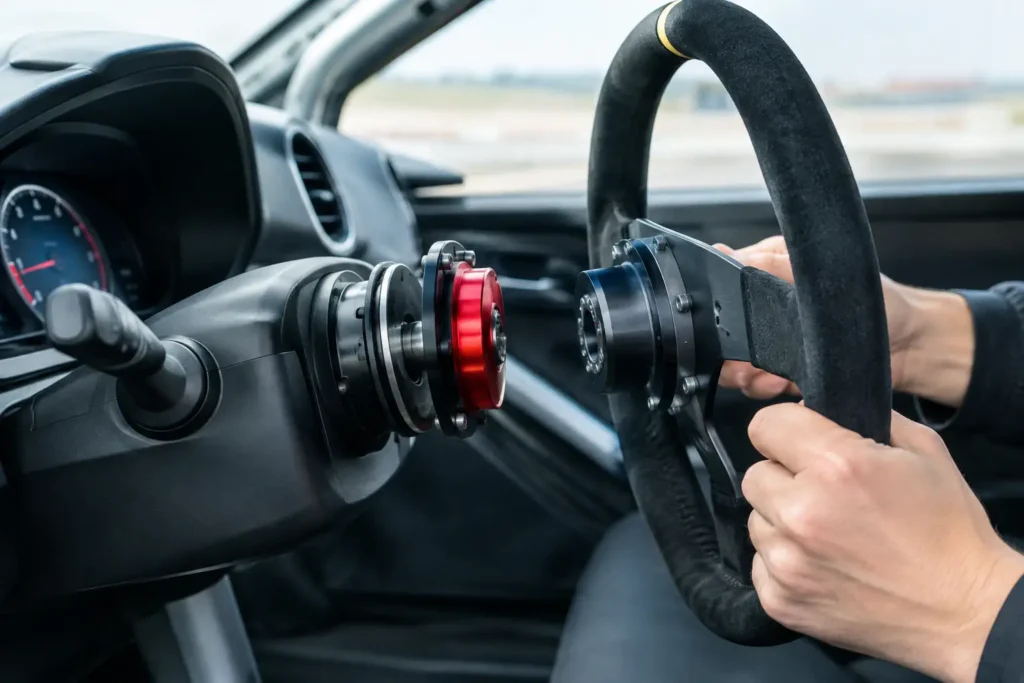
A steering wheel that detaches in one positive movement is more than a visual upgrade. In a caged drift car, tight-seated track build or competition cockpit, it can make access faster, improve driving position and add a layer of theft deterrence. The best quick release steering wheel is not simply the one with the loudest anodised finish or deepest dish. It is the wheel, boss and release system that suit the car, the driver and the job it is built to do.
Quick-release setups are often bought as a single item, but they are a system. The steering wheel, quick-release coupling, vehicle-specific boss and any required resistor or wiring solution must work together. Get one part wrong and you can end up with poor spline engagement, an awkward seating position, a non-functioning horn or, worse, unwanted movement at the wheel.
What Makes the Best Quick Release Steering Wheel?
The right setup should feel rigid, position the wheel accurately and release cleanly every time. It also needs to retain the functions your build requires, whether that is a horn button, paddle shift wiring or a motorsport-spec electrical connector.
Release mechanism and play
A quality quick release uses a positive locking mechanism, usually with ball bearings, a splined interface or a precision-machined engagement design. The key test is simple: once locked, there should be no perceptible rocking, clicking or rotational slack at the steering wheel.
Cheap universal couplings can look acceptable on the bench but develop play under load. That is especially noticeable during drifting, where the wheel is worked rapidly from lock to lock, and on circuit cars with high-grip tyres loading the steering system heavily. Choose a machined, motorsport-focused release rather than treating this component as a styling accessory.
A single-stage release is straightforward and fast to operate. A dual-stage or safety-collar design adds protection against accidental release, which is valuable in competition use. The trade-off is that it can take slightly longer to remove the wheel when getting in and out of the car.
Wheel diameter, dish and grip
Most aftermarket steering wheels are available in diameters around 320 mm to 350 mm. A 350 mm wheel offers more leverage and a traditional feel, often suiting older chassis, rally-inspired builds and cars without power steering. A 320 mm or 330 mm wheel gives quicker hand movement and more knee room, making it a popular choice for drift and track applications with power assistance.
Dish matters just as much. A flat wheel keeps the rim closer to the dashboard. A deep-dish wheel brings it towards the driver, which can correct an overlong seating position but may reduce leg clearance or place the rim too close to the chest. Measure your existing wheel position before ordering parts. A quick release itself adds length, so a deep-dish wheel plus a long boss can create an unsuitable driving position.
For grip, suede is a strong choice in a dedicated race or drift car when used with gloves. It provides excellent feel but wears quickly with bare hands and absorbs dirt. Leather is generally better for a fast-road build, while polyurethane is hard-wearing and easy to clean. The best material depends on how the car is actually used, not what looks most authentic in photographs.
Choosing a Quick Release Steering Wheel by Application
Drift cars
Drift drivers need quick steering inputs, consistent hand placement and enough clearance to work the wheel aggressively. A 330 mm to 350 mm round wheel is usually the practical choice. Avoid overly small wheels unless the steering ratio and assistance are set up to support them, as they can make sustained transitions more demanding.
A deeper dish may help bring the wheel closer after fitting a bucket seat and harnesses, but check clearance through full lock. Your hands should not hit the cage, dash switches or column stalks. A positive-locking quick release is essential, as is a wheel with a durable grip surface suited to regular use.
Circuit and time-attack cars
For track work, focus on repeatable driving position and clear instrument visibility. A 320 mm to 330 mm wheel is common where power steering is fitted, although taller drivers or cars with heavier steering may prefer 350 mm. A flat or mildly dished wheel often works best when the seat, pedal box and column have already been positioned properly.
If the car uses paddles, radio wiring or switch panels on the wheel, plan the electrical connection before choosing the release. A basic mechanical coupling will not manage those circuits on its own. Motorsport connectors are available for more complex cockpits, but they add cost and require careful installation.
Fast-road and show builds
A detachable steering wheel can make a modified road car easier to secure and can improve the cabin feel, but this is where compromises matter most. Many modern cars have airbags, steering-wheel controls, cruise control and clockspring wiring integrated into the original wheel. Removing these systems can trigger warning lights and affect safety equipment.
Check the legal, insurance and MOT implications for your specific vehicle before modifying the steering system for road use. A quick release may be ideal for an occasional road-registered track car, but it is not automatically the right answer for a daily driver with a functioning factory airbag.
Fitment Comes Before Style
The most common error is ordering a wheel and release without confirming the mounting pattern. Many aftermarket wheels use a six-bolt pattern, but there are different PCD standards. The quick release must match the steering wheel on one side and the correct vehicle-specific boss on the other.
The boss is not a universal part. It must suit the vehicle’s steering-column spline or mounting interface, along with the depth needed for safe clearance. Some applications also need a horn contact kit, resistor or wiring modification to avoid fault lights. Never force a boss onto a column or rely on loose adapters to make mismatched parts fit.
Before fitting, establish three measurements: the distance from the seat back to the wheel rim, the wheel’s distance from your chest, and the clearance between the rim and your legs. Aim for a relaxed bend in the arms with your shoulders supported by the seat. If you need to reach for the top of the wheel, the setup is too far away. If your elbows are heavily bent, it is too close.
Safety Checks That Should Not Be Skipped
The steering wheel is a primary control, so installation quality matters as much as component quality. Use the specified fasteners, fit them in the correct orientation and tighten them to the manufacturer’s torque guidance. Thread locking compound may be appropriate where specified, but it is not a substitute for correct bolt length, proper engagement and regular inspection.
Before driving, confirm that the release locks fully, the steering turns from lock to lock without interference, and the wheel remains centred when the front wheels are straight. Test the horn if retained. On a race car, inspect the coupling before every event and after any substantial kerb strike or contact.
Pay attention to the following when comparing systems:
- Zero detectable movement once the mechanism is locked
- A secure, deliberate release action that cannot be triggered accidentally
- Compatible wheel bolt pattern, boss fitment and horn provision
- Enough column clearance for hands, knees, dash controls and cage bars
- Materials and machining suitable for sustained motorsport loads
When a Fixed Wheel Is the Better Choice
A quick release is useful, but not mandatory. If the car has easy cabin access, a correctly positioned fixed wheel can be lighter, less expensive and one less component to inspect. This is particularly true for road cars where retaining factory safety systems is the priority.
For a stripped track or drift build with a fixed-back seat, harnesses and door bars, the argument changes. Being able to remove the wheel can make entry and exit far less awkward, especially when wearing a helmet. That practical gain is often the strongest reason to fit one.
Choose the system around your driving position first, then select the wheel diameter, dish and material that suit your discipline. A properly matched quick-release setup should disappear into the driving experience: no flex, no rattle, no compromised seating position – just a solid connection between driver and front tyres.