

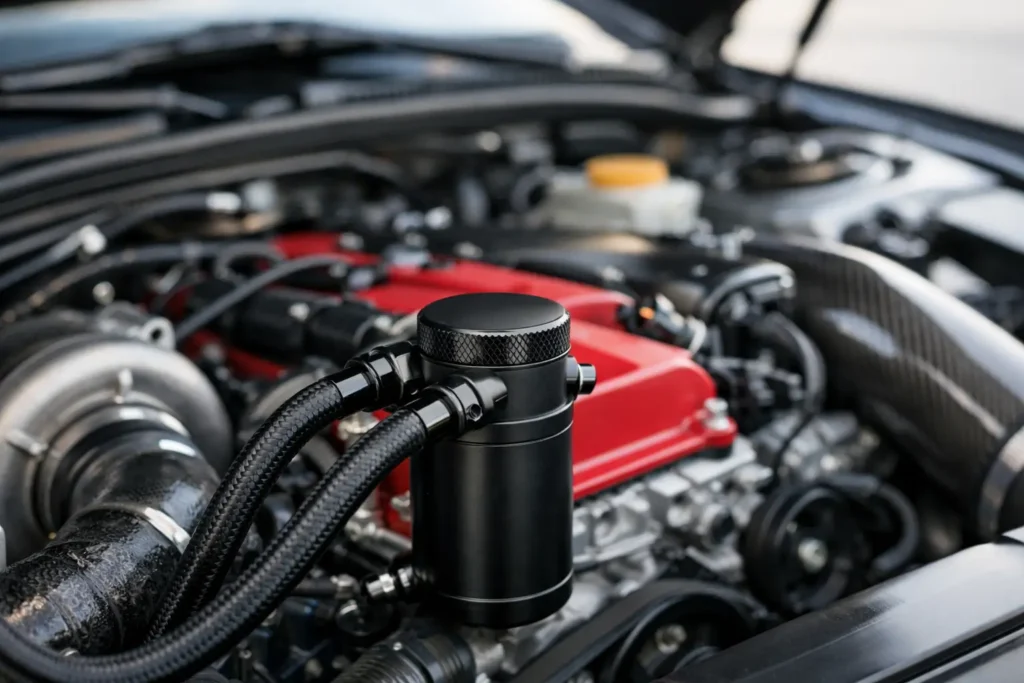
A cooling system that pushes coolant onto the circuit, the road or the garage floor is telling you something. Under sustained boost, high ambient temperatures and repeated high-RPM runs, coolant expands rapidly. So, what does a catch tank do? It gives that expanding coolant somewhere controlled to go, helping keep the engine bay clean while making fluid loss visible before it becomes an overheating problem.
For a drift car, track build or hard-driven turbo street car, that control matters. A properly chosen and installed catch tank is a simple piece of hardware, but it works alongside the radiator cap, expansion volume and hose routing. Get those details wrong and a shiny alloy tank will not cure an underlying cooling fault.
What Does a Catch Tank Do in a Cooling System?
In its most common motorsport use, a coolant catch tank collects coolant discharged from the cooling system through an overflow or vent line. As coolant temperature rises, the fluid expands. Once system pressure reaches the radiator cap’s rated limit, the cap opens and allows excess coolant and vapour to move through the overflow outlet rather than forcing it past a hose joint, radiator seam or weak cap seal.
The catch tank receives that discharge in a contained reservoir. This stops glycol-based coolant coating the engine bay, tyres and track surface. It also lets the driver or crew see how much coolant the system has expelled. A small amount of movement when the car is worked hard can be normal. A tank that fills repeatedly is a warning sign that needs investigating.
Many race series require a coolant catch tank because spilled coolant is slippery and dangerous. Even where regulations do not demand one, it is sensible hardware on a car that sees track days, drifting, hillclimbs or repeated pull runs. It is particularly useful where a custom radiator, relocated filler neck or tight engine bay makes the original overflow bottle unsuitable.
Catch Tank, Expansion Tank and Overflow Bottle: Know the Difference
These terms are often used interchangeably, but the plumbing arrangement changes what the tank actually does.
A basic catch tank is usually an overflow container. Coolant enters through a hose from the radiator neck or filler neck and stays in the tank. It may be vented and fitted with a breather, depending on the application and rules. Its job is containment, not necessarily returning coolant to the radiator.
A coolant recovery tank looks similar but is designed to return coolant to the system. When the engine cools, the coolant contracts and creates a vacuum. A recovery-style radiator cap draws coolant back from the bottle through a submerged pickup hose. For this to work, the hose must reach below the coolant level in the reservoir and the cap must be the correct recovery type.
An expansion tank, often called a header tank, is different again. It is commonly a pressurised part of the cooling circuit, mounted at or near the highest point in the system. It provides air separation, filling access and room for expansion while maintaining system pressure. Many modern road cars use a pressurised expansion tank rather than a traditional radiator-mounted cap.
Before ordering fittings, decide which system you have. Adding a vented catch tank to a cooling system intended to recover coolant can leave the radiator low after each heat cycle. Equally, treating a simple overflow bottle as a pressurised header tank can create leaks or restrict proper venting.
Why Pressure Control Matters
The radiator cap is not just a lid. It controls pressure, and pressure raises the boiling point of the coolant. That gives the cooling system a greater operating margin when cylinder-head temperatures climb under load.
If the cap opens at its intended pressure, excess fluid moves into the overflow line. If it opens too early because the cap is worn, incorrectly rated or the sealing surfaces are damaged, coolant can be pushed into the catch tank unnecessarily. If it cannot relieve pressure when it should, the weak point may become a hose, heater core, radiator end tank or gasket.
This is why a catch tank should never be used to hide overheating. It contains the evidence, but it does not fix the cause. Persistent coolant discharge can point to an undersized radiator, poor airflow, trapped air, a failing thermostat, incorrect ignition calibration, a weak cap or combustion gases entering the cooling system. On turbocharged builds, heat soak and inadequate ducting are frequent contributors too.
Choosing the Right Catch Tank for Your Build
Tank capacity depends on the vehicle, cooling-system volume and intended use. A lightly modified road car needs far less reserve than a high-compression circuit engine that lives near its thermal limit. Motorsport regulations may specify a minimum capacity or require a fully sealed system, so always check the rulebook for your championship or venue.
Material matters as well. A quality aluminium catch tank is durable, easy to mount and well suited to fabricated engine bays. Transparent plastic reservoirs make level checks quicker but need to be rated for heat and coolant exposure. Whichever route you choose, use a tank with secure mounting points, a reliable cap or vent arrangement, and hose connections that match the overflow outlet without forcing an improvised fit.
Placement is equally important. Mount the tank away from exhaust heat and moving belts, where it can be inspected without removing half the car. Keep the hose run clean and protected from abrasion. Avoid sharp kinks, low sections that can trap fluid, and routing that places coolant above electrical connectors or hot turbine housings if the tank vents.
For a recovery setup, the pickup hose inside the reservoir needs to remain submerged at the cold coolant level. For a simple catch tank, make sure the inlet is secure and the tank has enough free volume to deal with an unexpected discharge. A drain provision is useful, but do not fit a drain valve where it can be knocked open by kerbs, debris or workshop handling.
Installation Details That Make the Difference
The best catch tank installation starts with the radiator cap and filler arrangement. Identify the overflow port, confirm whether the cap is recovery-compatible, then select hose with suitable temperature and coolant resistance. Silicone hose may be appropriate for some installations, but correct internal diameter and secure clamps matter more than appearance.
Use motorsport-grade mounting hardware rather than cable ties around a hot radiator hose. Vibration cracks thin brackets and loosens poorly supported tanks over time. If the car is used competitively, safety-wire or positively retain caps and check that the installation meets scrutineering requirements.
After installation, bleed the cooling system properly. Air pockets can cause temperature spikes and coolant ejection that look exactly like an expansion problem. Run the engine through heat cycles, allow it to cool completely, then check the radiator or header-tank level and inspect the catch tank. Marking the cold level makes future changes obvious.
When a Catch Tank Is Not the Answer
A catch tank is sensible containment hardware, not a cure-all. If the tank receives coolant every time the car reaches temperature, do not simply fit a larger one and carry on. Check for coolant smell, bubbles in the header tank, unexplained pressure from cold, oil contamination, external leaks and fan operation. Confirm the radiator is adequately sized and that the shroud, fans and ducting pull air through the core rather than around it.
It also pays to distinguish a coolant catch tank from an oil catch can. An oil catch can sits in the crankcase ventilation system and separates oil vapour from blow-by gases before they enter the intake. Both are called catch tanks in casual conversation, but they manage entirely different fluids and should not be confused when planning a build.
For custom cooling systems, ProSpeed Parts customers should treat the tank, cap, hose, fittings and mounting as one system. The parts need to work together under heat, pressure and vibration, not just look right in the engine bay.
A well-specified catch tank gives expanding coolant a controlled place to go and gives you useful feedback on the health of the cooling system. If it stays dry, that is reassuring. If it starts collecting coolant, it has done its job by showing you where to look next – before a minor cooling issue ends a session or damages an engine.