

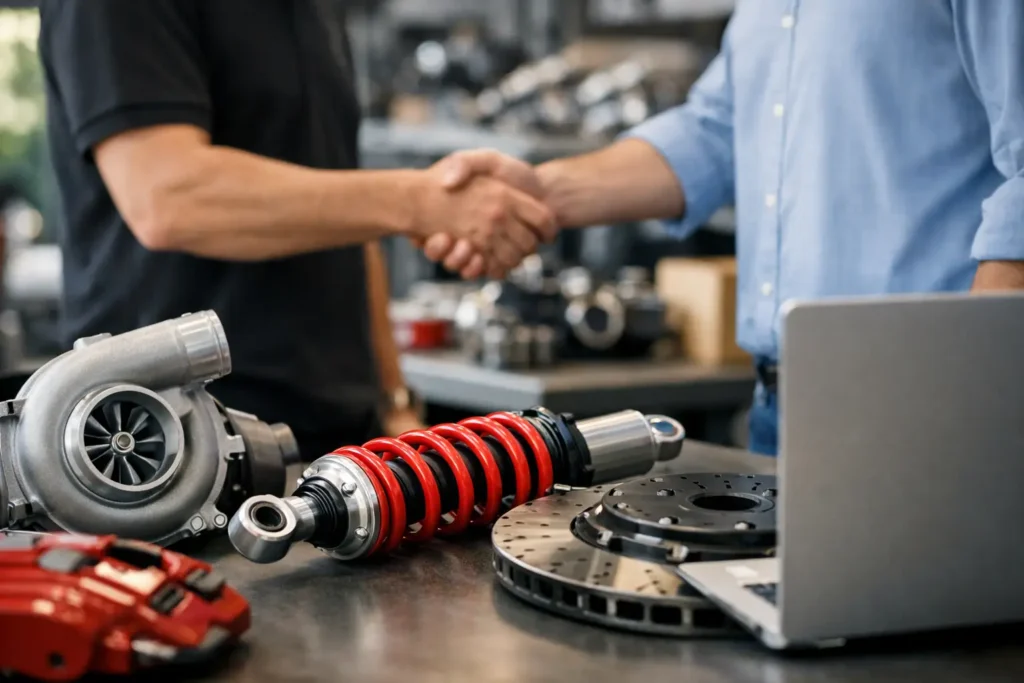
A trade account for performance parts is not simply a way to buy components at a better price. For a workshop, fabricator or race team, it is a supply arrangement that protects build margins, reduces downtime and makes repeat ordering far more efficient. When a customer’s turbo conversion is waiting on AN fittings, or a drift car needs fresh cooling hardware before the next event, buying from a supplier that understands the application matters.
The right account gives you access to performance-grade hardware across the systems you use every week: fuel, oil, boost, cooling, brakes, suspension, safety and engine management. More importantly, it gives your business a dependable route to source those parts without treating every order as a one-off retail purchase.
What a Trade Account for Performance Parts Should Deliver
A proper trade programme should support the way specialist garages actually work. That means serving everything from routine repeat orders for hose ends and clamps to a complete parts list for a customer build. The value is not only in the account pricing. It is in having a supplier with enough depth of catalogue to keep compatible components together.
For example, a custom fuel system can require hose, fittings, adapters, filters, pumps, mounting hardware and pressure-control components. Ordering each item from a different general parts retailer creates extra postage costs, more fitment risk and more time spent chasing deliveries. A performance-focused trade supplier helps keep the specification consistent from tank to rail.
Trade customers should also expect access to recognised brands alongside dependable workshop hardware. A build may need a specific ECU, wastegate, coil pack, air filter or suspension kit, while the supporting installation parts come from the same order. This is especially useful for street and track cars where the customer wants proven branded components, but the installer needs every connection, bracket and fluid-system part to be right as well.
Better Margins Without Cutting Corners
Margin is earned in more places than the headline price of a part. A trade account can help reduce the hidden costs that eat into a job: repeated administration, incorrect orders, fragmented deliveries and time lost finding a compatible alternative when stock is short.
It also gives workshops a clearer basis for quoting. If you regularly install oil coolers, turbo kits, suspension packages or brake upgrades, you can build more accurate parts allowances into estimates. Rather than making a rough allowance and hoping retail pricing has not moved by the time the customer approves the work, your purchasing structure is more predictable.
That does not mean the cheapest item is always the best option. A budget fitting that seeps under pressure, a poor-quality silicone hose or an unbranded sensor with inconsistent readings can turn a profitable job into a comeback. Performance vehicles expose weak components quickly through heat, vibration, pressure and repeated hard use. Trade buying should help you specify parts that protect your reputation, not encourage shortcuts.
Price Is Only One Part of the Calculation
A lower-cost component can make sense on a mild road-car refresh where the system is not being pushed beyond factory conditions. It is less sensible on a high-boost engine, endurance car or competition drift setup where failure can end a weekend. The application decides the component level.
The same applies to branded versus own-brand hardware. Quality workshop ranges can be excellent value for recurring consumables and installation components, provided the material, thread standard, pressure rating and intended fluid are correct. For a critical electronics or suspension decision, a customer may reasonably prefer a recognised specialist manufacturer. A strong trade account should let you choose either route without needing to change supplier.
Faster Ordering for Repeat Build Work
Most specialist workshops have a familiar pattern of jobs. One month may bring several BMW cooling upgrades; the next may be full of Japanese turbo builds, track-day brake work or drift-car repairs. The exact vehicle changes, but many component needs repeat.
A trade relationship makes it easier to standardise the parts you trust. You may have preferred hose sizes for catch-can installs, a proven selection of clamps for charge pipes, or specific fittings that work well in fuel-cell plumbing. Keeping these choices consistent saves time in the workshop and produces cleaner, more serviceable builds.
This is where specification discipline matters. Record the thread type, hose inner diameter, fitting angle, material, seal type and operating fluid for every setup you use regularly. AN and NPT, for example, are not interchangeable simply because they appear similar at a glance. Metric threads, BSP threads and sensor adapters need the same attention. A trade price is useful, but avoiding one incorrect fitting is often worth more than the saving on a whole order.
For teams operating to an event deadline, speed is equally important. A supplier that carries a broad range of stock can reduce the number of parcels and the chance that a small but essential part delays an entire installation. Worldwide DHL Express shipping is particularly valuable for international teams and workshops that cannot afford a car sitting incomplete because of a missing adapter or replacement valve.
Build a Smarter Purchasing Process
The best way to get value from trade buying is to organise purchasing around your actual workshop workflow. Start by separating common stock items from vehicle-specific parts. Common stock may include clamps, P-clips, hose, fittings, heat protection, seals and fastening hardware. Vehicle-specific items include intercoolers, brake kits, coilovers, ECUs and application-led intake components.
Keep the fast-moving items on hand where cash flow allows. There is no benefit in holding shelves of slow-moving specialist parts just because the trade price is attractive. Stock the hardware that repeatedly prevents delays, then order larger application-specific components against confirmed work.
Before placing an order, confirm four points: vehicle fitment, system specification, supporting parts and delivery timing. This sounds basic, but performance modifications often change the original assumptions. An upgraded turbo can alter oil-feed needs. A larger fuel pump may need revised wiring and a different filter arrangement. Lowered suspension can affect wheel clearance and alignment requirements. Every modification has knock-on effects.
A good supplier relationship helps here, but the installer remains responsible for the final specification. Share exact measurements, thread details and power goals rather than asking whether a part will fit in general terms. Clear information gets faster, more accurate support.
Who Benefits Most From a Trade Programme?
Trade accounts work best for businesses and teams with repeat purchasing needs. Performance workshops benefit because they can quote and order with more consistency. Fabricators benefit from regular access to fittings, hose, clamps and fluid-system components used across custom work. Motorsport teams benefit from a supply source that understands the urgency of replacement parts and pre-event preparation.
Mobile tuners and smaller garages can benefit too, although the right approach may differ. If your work is occasional, concentrate on account access, reliable product information and delivery speed rather than tying up cash in large stock holdings. If you build several cars a month, standardising common parts and creating internal build lists will produce a bigger return.
Enthusiasts running multiple project cars may also be eligible depending on the programme requirements, but trade terms are designed around professional or repeat-use purchasing. The purpose is to help customers who need a dependable long-term supply route, not to turn every single retail order into a wholesale transaction.
Choose a Supplier That Understands Modified Cars
General motor factors are useful for service items, but custom performance work demands a different depth of knowledge. You need a supplier that recognises why fuel-system compatibility, boost control, thermal management and installation hardware cannot be treated as afterthoughts.
ProSpeed Parts is built around that requirement, with specialist PRO-S hardware and established performance brands across street, drift and race applications. For a workshop, the practical advantage is being able to source the visible upgrade and the less glamorous parts that make it dependable once the car is under load.
A trade account should make your purchasing faster, your quotes tighter and your builds easier to support after handover. Set it up around the parts and systems you fit most, buy to specification rather than appearance, and let every repeat order reinforce the standard your customers come back for.